Professional Pool Plastering & Replastering in St. Louis
When a pool’s finish wears out, replastering gives it a fresh, smooth
surface. Hogan Pools resurfaces pools for homeowners in Ballwin, St. Louis, and
surrounding Missouri communities, from finish selection through fill and start-up.
At Hogan Pools, we generally recommend a pebble finish when the project and budget
allow. We value its natural appearance and long-term durability. Quartz and
traditional marcite are also available for homeowners looking for a more economical
finish. Each involves different trade-offs in appearance, upkeep, and long-term
wear, and we will walk you through them before you choose a surface.
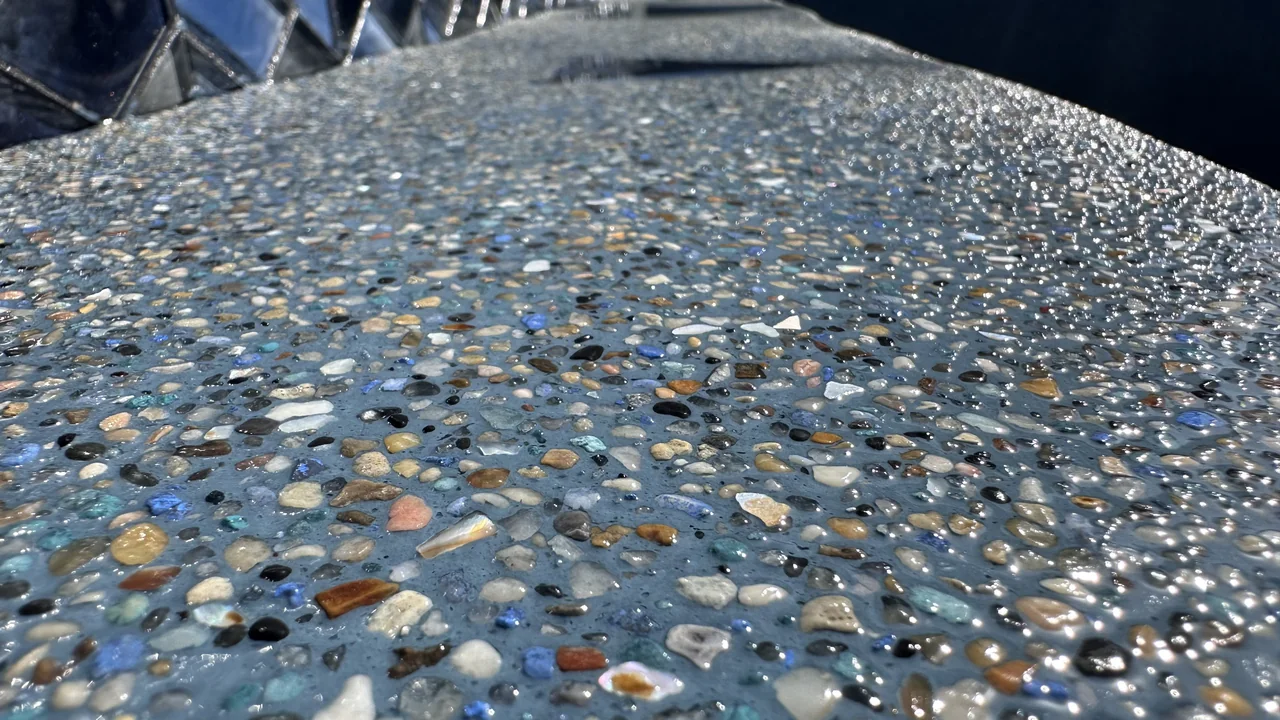
Close-up of a pebble pool finish.
Pebble finish Our recommendation
Small, rounded natural pebbles bound in cement, with the surface exposed so the
aggregate shows. Based on our experience with how it looks and wears over time,
it is the finish we recommend when it fits the project.
Strengths
Natural, textured appearance
Generally durable and resistant to everyday wear
Good long-term value for a pool you plan to keep
Considerations
Typically a higher up-front cost than quartz or marcite
A textured feel underfoot, which varies by product
Still needs balanced water and routine care
Quartz finish
Fine quartz aggregate blended into a cement-based plaster. It has a finer
texture than pebble, comes in a range of colors, and is a more economical
alternative.
Strengths
Finer texture than pebble
A range of color options
Lower cost than pebble
Considerations
In our experience, generally not as long-wearing as pebble
Color and texture can change over time with wear and water chemistry
Traditional marcite
The conventional smooth white pool plaster, made from cement and marble
aggregate. It is typically the most economical of the three finishes.
Strengths
Classic bright, smooth appearance
Typically the most economical finish
A long track record in residential pools
Considerations
More sensitive to water chemistry
Can show staining, etching, or roughness sooner if water is not kept balanced
How any finish performs depends on the specific product, how it is applied, and how
the water is cared for. Colors and textures also look different in person than on a
screen, so look at actual finish samples before you decide.
Pool Plastering & Replastering Services
Pool plaster is the cementitious interior finish applied over a gunite shell.
Together with the shell beneath it, it forms the pool’s watertight surface,
and it shapes how the water looks and how the pool feels underfoot. A new gunite
pool gets its first finish at the end of construction. Over the years, sun,
temperature swings, water chemistry, and use wear that finish down, and replastering
replaces it.
Preparation depends on the pool. Some surfaces need loose or failed plaster removed;
others need the existing finish taken off more completely. Either way, the surface
is prepared so the new finish bonds well, and any problems found underneath are
addressed first. Our team is trained at Watershape University and follows National
Plasterers Council (NPC) best practices, including proper fill procedures, careful
start-up, and water-balance guidance.
Hogan Pools is a family-owned pool builder founded in 2018 by Anthony George, with
pool-building roots that reach back to 1976 through three generations. To see how we
approach pool work from the ground up, read about
our custom pool construction process.
When Does a Pool Need Replastering?
Plaster wears gradually, so the signs are easy to get used to. These are worth
paying attention to:
A rough or sandy texture. Walls or floors that feel abrasive on
feet or snag swimsuits.
Persistent discoloration. Stains that keep returning, or a
mottled look that brushing and balanced water do not fix.
Etching or pitting. Small pits or a worn, eaten-away look, often
from water that has been out of balance.
Cracks. Fine surface cracks are common and not always a concern.
Wide, spreading, or numerous cracks deserve a closer look.
Hollow or separating plaster. Areas that sound hollow when
tapped, or that chip or peel away from the shell.
Recurring scale. Rough, crusty mineral deposits that return soon
after cleaning.
Any one of these does not automatically mean the pool needs replastering. Some
stains and scale respond to cleaning and water-chemistry adjustments, while an issue
that looks cosmetic can occasionally point to something deeper. A professional
assessment tells the difference.
Our Replastering Process
Every pool is different, so the details of your project will vary. This is the
general sequence a replastering project follows.
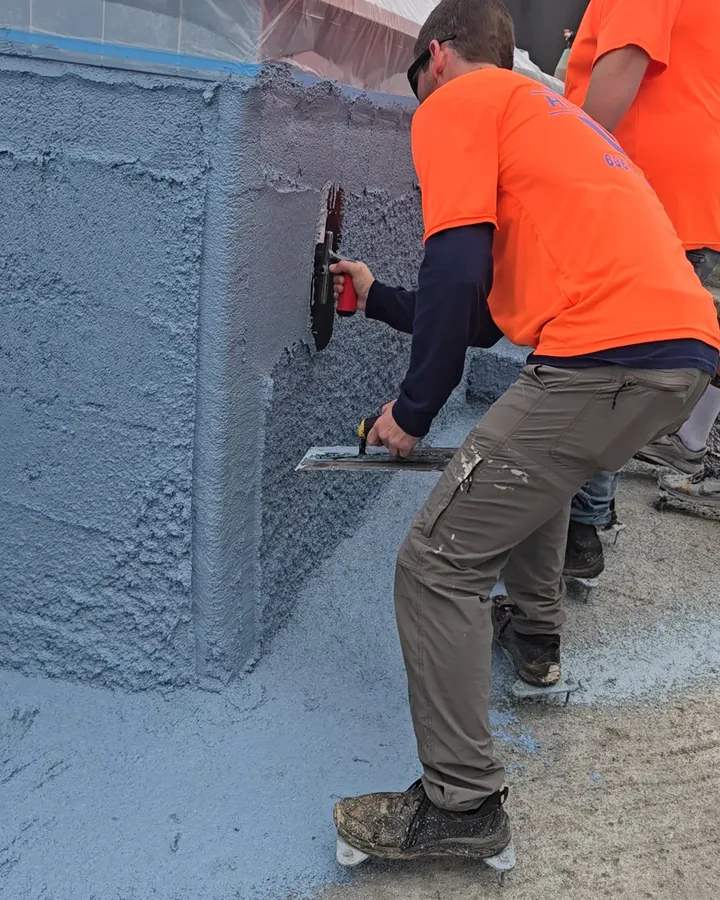
Hogan Pools crew member carefully applying the pool’s interior plaster finish by
hand.
Evaluate the pool and discuss goals
We look at the condition of the existing surface, talk through what you have
noticed, and discuss which finish fits your pool and budget.
Drain and prepare safely
The pool is drained with care, since groundwater can put pressure on an empty
shell. The surface is then prepared so the new finish can bond, which may mean
removing loose or failed plaster or more of the existing finish.
Address necessary repairs
Problems that preparation uncovers are taken care of before the new finish goes
on.
Apply the new finish
Plaster has to be applied and finished while it is workable. An even, careful
application helps the finish cure evenly for a smoother surface and more uniform
color.
Fill correctly
Filling begins promptly after plastering and continues without interruption,
following NPC best practices for fill procedures.
Start up and balance the water
A careful start-up protects the new surface while it cures. We give you
water-balance guidance for the first weeks and beyond.
Proper Filling, Startup & Water Chemistry
The first weeks after plastering matter nearly as much as the application itself. A
new cementitious finish is still curing and reacts to the water around it. Poor fill
practices or unbalanced water during that time can lead to etching, scaling,
staining, and uneven color that shorten the life of the finish and change how it
looks.
Fill without stopping. Pausing a fill partway can leave a visible
line in the finish.
Keep the water balanced. pH, alkalinity, and calcium hardness all
affect how plaster cures and holds up.
Brush the new surface. Brushing during the early weeks helps
clear plaster dust and supports an even cure.
Add chemicals as directed. Follow the start-up guidance for what
to add and when.
Keep it up long term. Regular water testing and a consistent
routine do more for a finish’s lifespan than almost anything else.
Start-up requirements differ by finish and product, so always follow the specific
instructions you are given for your pool.
Frequently Asked Questions
Does my pool need replastering, or just a cleaning?
It depends on what you are seeing. Light stains and scale can often be handled
with cleaning and water-chemistry adjustments. Rough texture, pitting, hollow
spots, flaking, or widespread cracking point toward replastering. A professional
assessment is the surest way to know.
Which finish do you recommend?
We generally recommend a pebble finish when the project and budget allow, for its
natural appearance and long-term durability. Quartz and traditional marcite are
more economical alternatives, each with its own trade-offs, and we will help you
weigh them for your pool.
Does the pool have to be drained?
Yes. The water has to come out so the surface can be prepared and the new finish
applied. Draining an in-ground pool should be done carefully, since groundwater
can put pressure on an empty shell.
How long does replastering take?
It depends on the size of the pool, the repairs needed, the finish you choose, and
the weather. After we look at your pool, we can give you a clearer idea of what to
expect.
How much does replastering cost?
Cost depends on the size and condition of the pool, the repairs needed, and the
finish you choose, so we cannot give a fair number without seeing your pool.
Contact us to talk through your project.
When can we swim again?
Not until the pool has been filled and started up according to the guidance for
your finish. We will explain what to expect so the new surface gets the best
start.
Will replastering fix a leak?
Not on its own. Leaks can come from plumbing, fittings, or the shell. If you
suspect your pool is losing water, mention it when you reach out so it can be
evaluated.
How long will new plaster last?
It depends on the finish, how consistently the water is kept balanced, how the
pool is used, and the climate. Of those, water chemistry is the factor you control
most.
What areas do you serve?
We work with homeowners in Ballwin, St. Louis, and surrounding Missouri
communities. Contact us if you are unsure whether your address is in range. For
broader pool questions, see our frequently asked questions.
Request a Consultation
If your pool’s finish is showing its age, or you are thinking about a fresh
look, reach out to Hogan Pools. We will talk through what you are seeing and the
options for your pool.